30 Minutes of Financial Clarity
A 30-minute look at your finances can tell you more than you think—without a spreadsheet, a budget, or getting everything organized first.
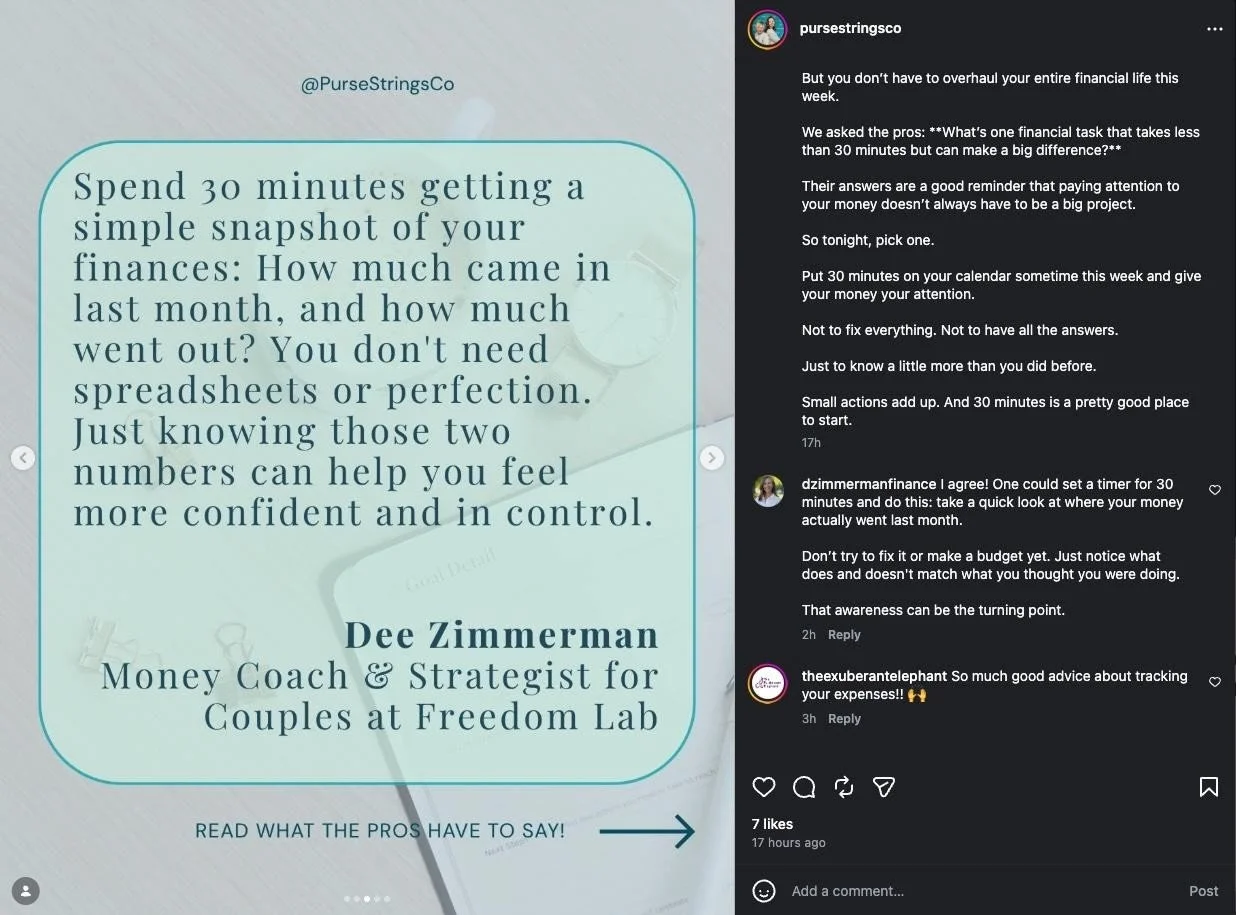
Purse Strings recently asked financial pros for one task that takes less than 30 minutes but can make a big difference. As one of their Approved Professionals, here was my answer:
Take a quick look at where your money actually went last month.
Nice thing is you don’t have to fix it yet. And you don’t have to make a “budget.” Just notice what does and doesn’t match what you thought you were doing.
I know this can feel overwhelming. Partly because we’re often concerned about what we’ll find. It can bring up conflict with ourselves, or with our partner. And it can also feel like a huge task... when it really doesn’t have to be.
You may feel “behind” with your finances and afraid of finding something bad. Or you might feel like you need a spreadsheet or an entire Saturday (yuck). Or that you have to “get organized first.” All of this creates a lot of friction... and then it simply doesn’t happen. And another month goes by.
What if you did this instead?
Pull up your accounts. Grab a pad of paper and a pen. Set a timer for 30 minutes.
That’s it. Nothing fancy and nothing perfect.
Just answer a few simple questions:
How much came in?
How much went out?
Where did most of it go?
What surprised you?
What didn’t match what you thought?
If all you figure out in 30 minutes is, “Wow, groceries were more than I thought,” or, “We spent less eating out than I thought,” that’s really useful.
The real value of this exercise is awareness. And that awareness can be the turning point, because once you see what really happened, you can stop making decisions based on assumptions.
Once you’ve done this 30-minute exercise, a tool can make it much easier without starting from scratch every month. Monarch is the tool I use now to see what’s happening across our financial life in one place.
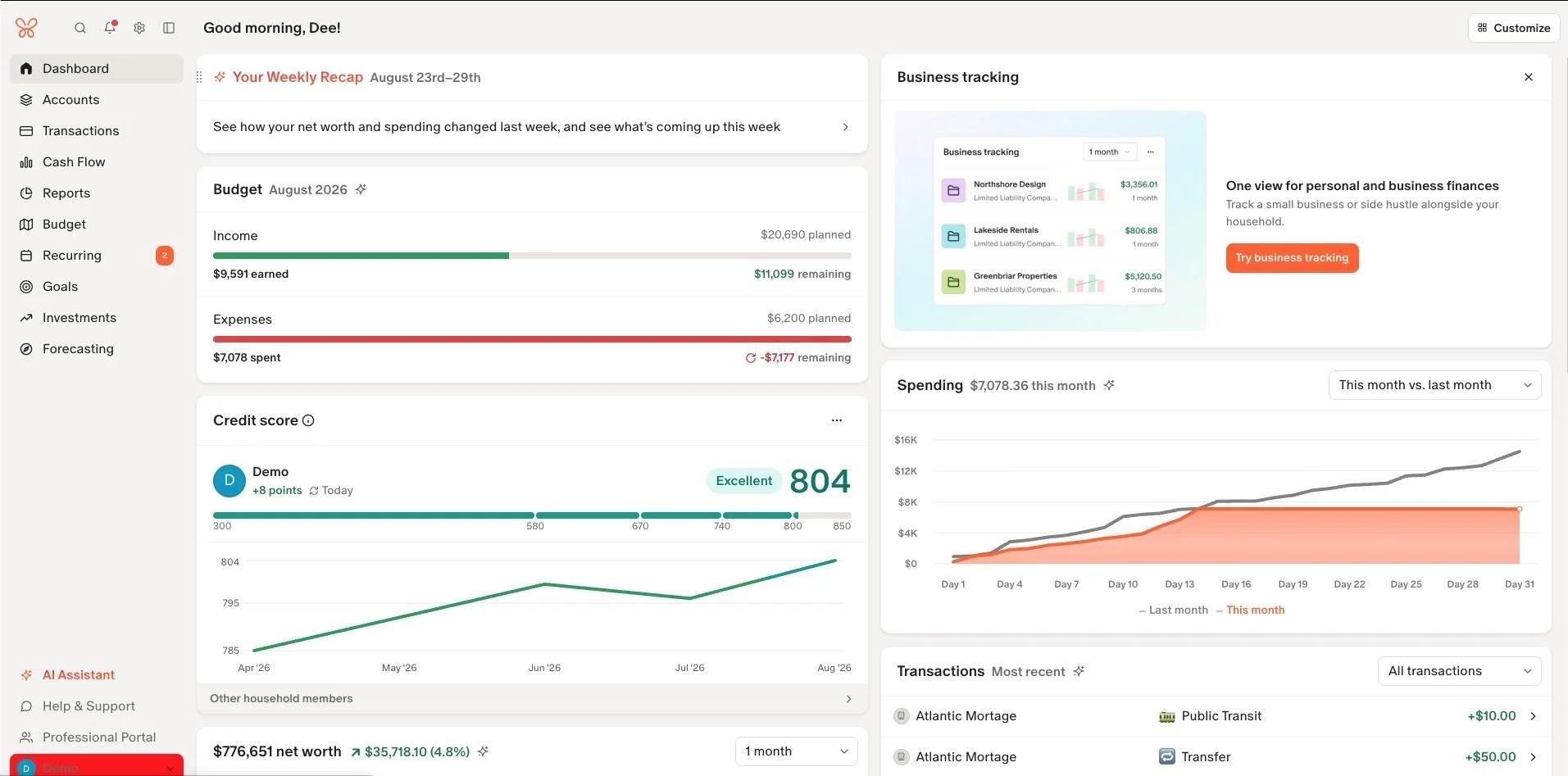
Example Monarch dashboard from my professional account (not my personal financial data).
Last week I showed you Boldin, which helps me look ahead. Monarch helps me see what’s happening right now.
I used to use a simpler budgeting program that worked for what we needed at the time. But one of the big reasons I switched to Monarch was that I could link all our accounts, including our investment accounts, and get a much broader view of what was happening. I can see spending, cash flow, investment growth, net worth, allocations, planned funds—all in one place.
And I still don’t use every feature. I probably don’t even understand every one of them. But you don’t have to master the whole thing to get value from it. What I like is that you can start simple and go deeper later.
If you want to check out Monarch, here’s my referral link. You’ll get 50% off your first year, and I’ll receive a $30 gift card if you sign up.
But remember: if you’re not already using an app, your first step can be much simpler than that.
Accounts + paper + pen + 30 minutes.
Set the timer and learn one thing you didn’t know before. And maybe next month, you can learn one more.
Enjoy your 30 minutes! 🍫Chocolate helps.
Dee
P.S. If you and your partner are ready for help getting clear on your finances and figuring out what to do next, I offer a free consultation to talk through what’s going on and whether working together might help. You can schedule one here.