
Money & Relationships Blog
Click here to join Dee’s weekly reflections for money stories, insights, and updates.
The 7 Financial Blind Spots Couples Worth Noticing guide highlights common patterns, pressure points, and missed opportunities that often create stress around money—even in otherwise strong relationships.
Download the free guide and start seeing what's really happening beneath the surface.
Noticing patterns that keep you stuck?
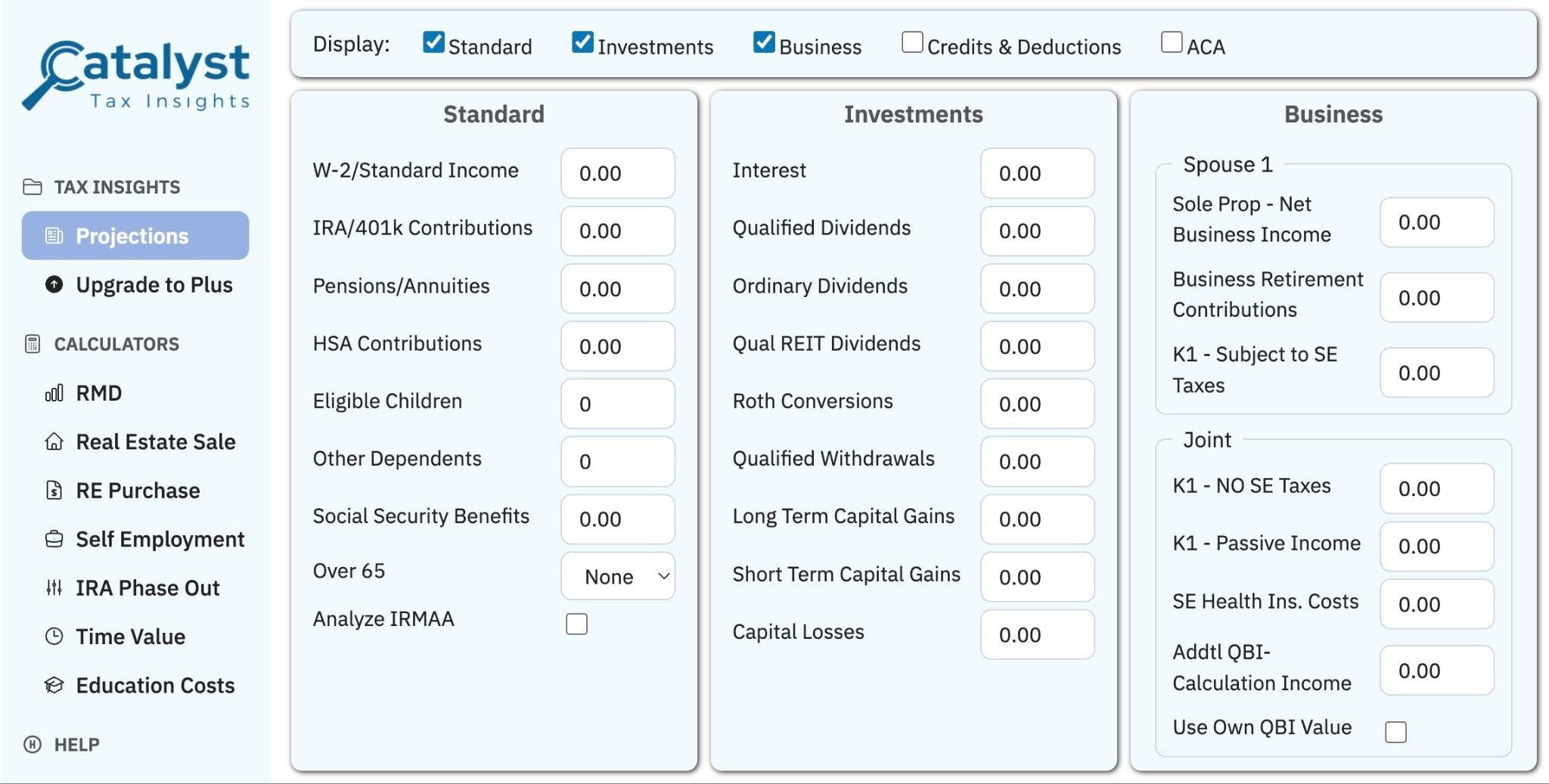
When a Tax Calculator Isn’t Enough
Sometimes the tax question you’re asking is more complicated than a basic online calculator can handle. I’m trying Catalyst Tax Insights as a way to model “what if” tax scenarios before making a decision.
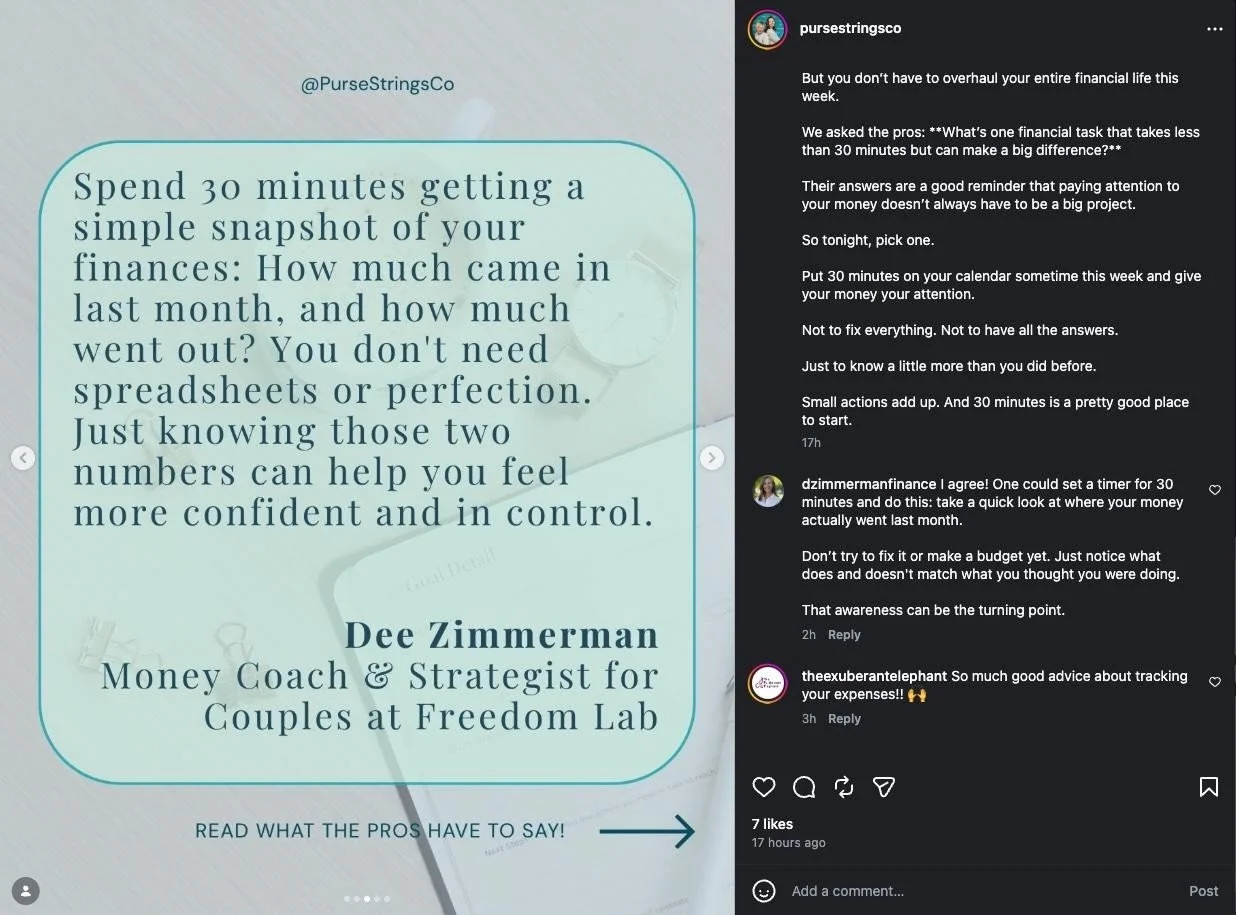
30 Minutes of Financial Clarity
A simple 30-minute review of last month’s money can reveal more than you think. Start with awareness first, then use tools like Monarch to make ongoing financial visibility easier.
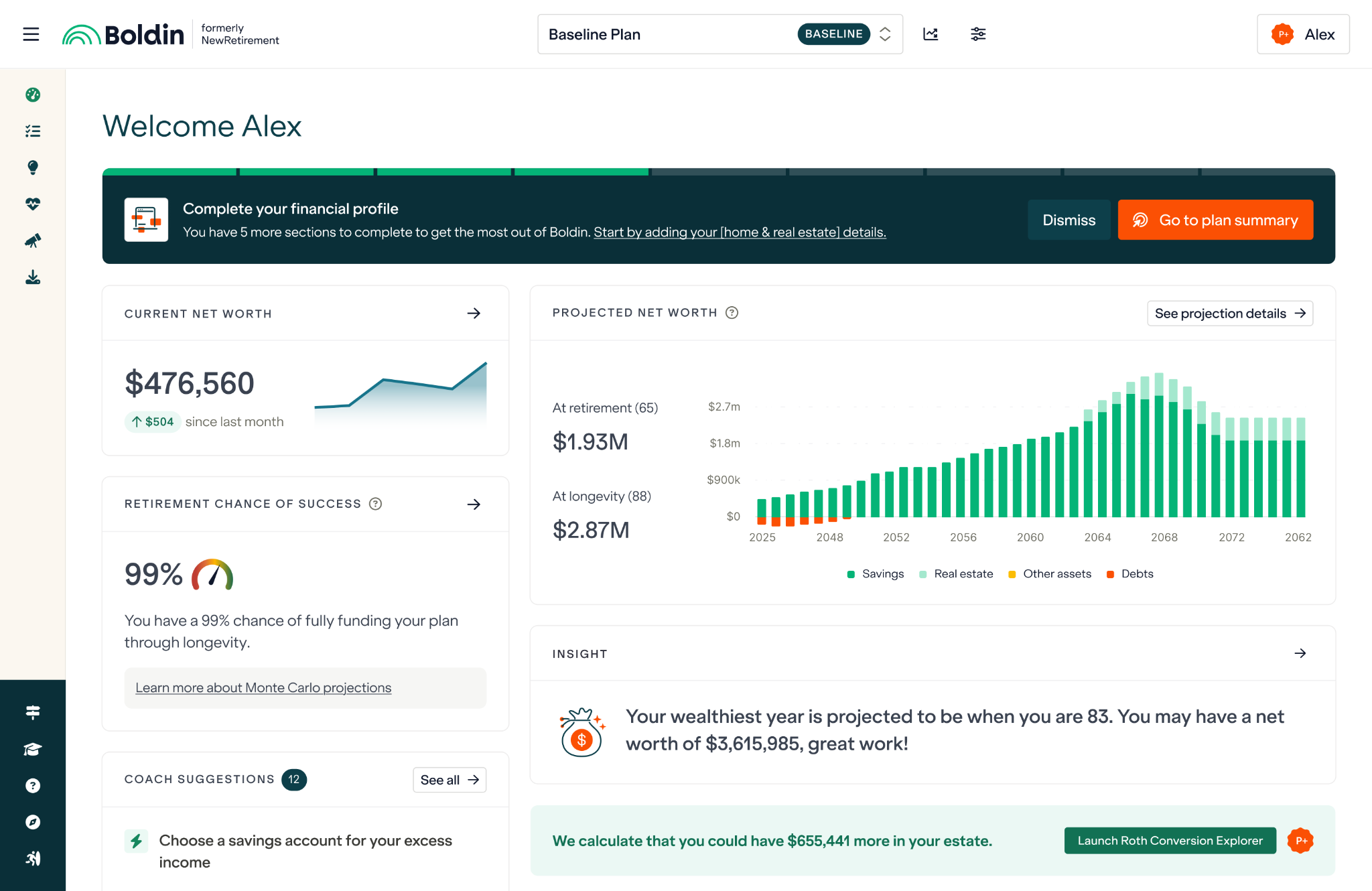
A Tool for Testing What’s Possible
A good retirement planning tool can help you see what your current path may produce, test different choices, and make decisions with more confidence.

What Do You Want Your Money to Build?
Saving and investing are important, but growth is more meaningful when you know what you want it to make possible. What kind of life are you building toward?

Good News! More Than They Realized
Sometimes the most powerful part of building wealth is realizing what you’ve already created. For one couple, seeing the future value of their savings and investments gave them options at exactly the time they needed them.
Are You Doing What It Takes to Get There?
You may be saving, investing, and building equity without knowing what your current path is likely to produce. A clear look at the numbers can reveal gaps, opportunities, and the changes that would matter most.

What Could Your Money Become?
Saving regularly is a good start. But do you know what your current habits are likely to produce—or how a few intentional adjustments could change the outcome?

The Life You’re Living and the Life You’re Building
A healthy financial life makes room for everyday needs, the things you value now, and the future you’re still building. The 60–20–20 bucket plan can help you see whether all three are receiving attention.

Everyone Deserves Financial Confidence
What would happen if one person suddenly had to take over the family finances? Financial partnership means making sure both people understand enough to step in when life requires it.

The Conversation Before the Conversation
When money conversations have become tense, it's natural to think the answer is to sit down and work harder on the finances. But what if the first step isn't a better budget at all? Creating emotional safety through small, curious conversations can change everything that follows.

What If Your Household Is Really a Small Business?
Most of us never consciously decide how we're going to manage money as a couple or family. Our systems simply evolve over time. But what if the frustration many households experience isn't because they're bad at managing money—it's because they're managing something much bigger than they realize?

Being Ready Makes Life Easier
Most people think financial organization is about being organized. I've come to believe the real benefit is something much simpler: being ready. Ready for unexpected expenses, opportunities, important conversations, and the future you're building.

The Cost of Carrying Everything in Your Head
Most financial tasks aren't particularly difficult. They're just unfinished. A beneficiary update, an insurance question, a reimbursement, a phone call. Small tasks have a way of lingering in our minds, creating mental clutter and hidden stress long before they ever become actual financial problems.

The Blind Spot Isn’t the Expense
A septic invoice and a $4,200 repair reminded me of something I see with couples all the time: the expense itself is often not the real source of stress. Sometimes we mistake a normal season of life for a financial problem.

Financial Blind Spots Worth Noticing
Over the years, I started noticing certain hidden stress points that repeatedly show up for couples around money. I finally gathered them together into a new reflection guide: 7 Financial Blind Spots Worth Noticing.

I Don’t Want Money Commenting on Every Decision
Even necessary and worthwhile expenses can start making money feel emotionally loud. A reflection on home projects, financial systems, and why many people are really seeking less emotional noise around money.

The Browser Tabs You Can’t Close
Money stress often feels like a hundred browser tabs open in the background. This article explores “attention residue,” unresolved financial loops, and how better money flow can reduce mental clutter and tension in relationships.

Why Some Months Feel Off
If your money feels inconsistent from month to month, it may not be income or spending. Here’s what’s often missing in between.

A Budget. Ugh. (Or is It?)
Most people don’t want more structure with their money. They want it to feel easier. But without something supporting it, it rarely does. Here’s what begins to change that.

What Happens When You Finally Look at the Numbers
Looking at your numbers can bring up more than expected—tension, defensiveness, and quick reactions. This post explores why that happens and how to approach your money in a way that supports both you and your relationship.